Sterile Processing Technician vs Surgical Tech: Which Fits You?
Sterile processing techs clean and sterilize surgical tools behind the scenes; surgical techs work chairside in the OR. Compare training, pay, and daily work here.
If you're choosing between becoming a sterile processing technician or a surgical technologist, the short answer is this: sterile processing technicians clean, inspect, and sterilize surgical instruments in a back-of-house department and train in weeks to a few months, while surgical technologists work directly in the operating room handing instruments to surgeons and typically need 12 to 24 months of schooling, often an associate degree. Sterile processing gets you into a hospital faster and cheaper. Surgical tech takes longer but puts you at the table during surgery, with a somewhat higher career ceiling in the OR itself.
Both jobs matter to patient safety, and both are real, stable healthcare careers you can start without a four-year degree. The right choice depends on how fast you need to start earning, whether you want to be near patients or near instruments, and how much time and money you can put into training up front.
Quick answer
- Training time: Sterile processing tech, weeks to a few months. Surgical tech, usually 12 to 24 months.
- Setting: Sterile processing works in the decontamination and sterilization area (called SPD, or sterile processing department). Surgical tech works scrubbed in at the operating table.
- Patient contact: Sterile processing techs rarely see patients. Surgical techs are in the room during surgery.
- Certification: Sterile processing techs sit for CRCST (through HSPA) or CSPDT (through CBSPD). Surgical techs sit for the CST exam through NBSTSA.
- Cost to start: Sterile processing training generally costs far less than a surgical tech associate degree program.
What's the biggest difference between the two jobs?
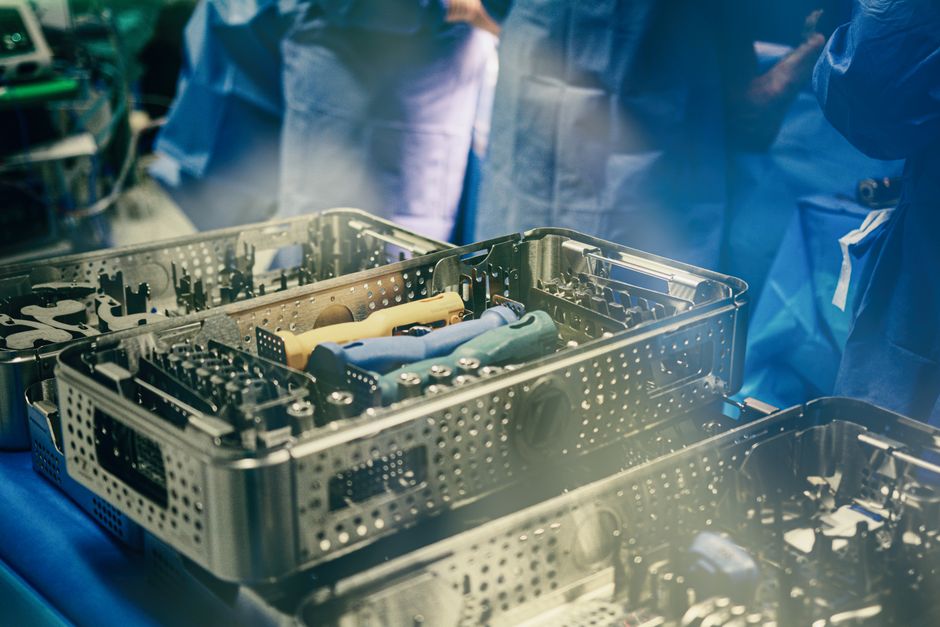
The biggest difference is where you work and who you're facing: instruments or patients. A sterile processing technician works in a department most patients never see, decontaminating, inspecting, and sterilizing the tools surgeons use — think autoclaves (machines that use pressurized steam to kill bacteria and viruses on instruments), ultrasonic washers, and instrument trays that have to be assembled exactly to a checklist called an IFU, or instructions for use, provided by the manufacturer.
A surgical technologist, by contrast, scrubs in and stands next to the surgeon during the operation itself, passing instruments, holding retractors, and helping keep the sterile field intact in real time. If you want a mental picture: sterile processing is the department that makes sure the tray is perfect before it ever reaches the OR. Surgical tech is the person using that tray while the patient is on the table. You can read a fuller breakdown of the sterile processing side on our overview of what sterile processing actually is.
How long does training take for each?
Sterile processing training is measured in weeks to a few months; surgical tech training is measured in years. Sterile processing certificate programs — including our 9-week course, which runs a free orientation week followed by 8 weeks of coursework — are built to get you exam-ready for CRCST or CSPDT quickly, without a long academic commitment.
Surgical technologist programs are typically offered through community colleges or vocational schools and run 12 to 24 months, often ending in an associate degree or a longer certificate. That extra time covers surgical anatomy, procedure-specific instrument sets, and supervised clinical rotations in live operating rooms, which sterile processing programs don't require in the same depth.
Which one costs more?
Sterile processing training generally costs less because it's shorter and doesn't require a full academic term structure. Surgical tech programs, especially ones that award an associate degree, tend to carry community college tuition rates, and total program cost is usually higher simply because the program is longer and includes more lab and clinical hours.
If upfront cost and time-to-paycheck are your main constraints, sterile processing is the faster on-ramp into a hospital. That said, surgical tech's longer training is also why the role generally carries more responsibility and a different pay ceiling — you're paying for more time in the classroom and the OR.
Which one pays more?
Posted salaries for both roles vary widely by city, employer, and shift, but the general pattern in job postings is that surgical technologists tend to start somewhat higher than sterile processing technicians, largely because their training is longer and their role carries direct responsibility during surgery. Sterile processing techs can close some of that gap over time through certifications, shift differentials, and moving into lead or supervisor roles.
Rather than quote a specific number, the honest way to compare is: check current job postings for both titles in your metro area, since pay depends heavily on the hospital, the shift, and your certification level going in.
What does a typical day look like?
A sterile processing tech's day is built around the decontamination-to-sterile cycle: soiled instruments come in, get sorted and washed in decon (often in scrubs, gloves, a face shield, and a fluid-resistant gown because of the splash risk), then move to an inspection and assembly area where trays are checked instrument by instrument against the IFU, then loaded into a sterilizer, and finally stored or delivered back to the OR. It's repetitive, detail-heavy work, often standing for most of a 8- to 12-hour shift, and decon areas run warm and humid because of the washers.
A surgical tech's day centers on specific surgeries scheduled for that shift. You scrub in, set up the sterile field, hand instruments during the procedure, and help close out the room afterward. Shifts can run long and unpredictably if a surgery runs over, and you're on your feet for the length of the case, sometimes several hours without a break.
Which one has more patient contact?
Surgical tech has direct patient contact; sterile processing has almost none. If being near patients and in the middle of a live procedure is part of why you want a healthcare job, surgical tech delivers that in a way sterile processing simply doesn't — SPD techs work with instruments, not people, and most never set foot in an OR during a live case.
Some people prefer that distance. If you're drawn to healthcare for the mission but don't want direct patient interaction — no blood-facing bedside work, no difficult family conversations — sterile processing lets you contribute to patient safety from a step removed.
Which one is easier to break into with no healthcare background?
Sterile processing is generally the faster path in if you're coming from outside healthcare entirely — retail, food service, warehouse work, caregiving. Training is shorter, doesn't require a full degree program, and the CRCST and CSPDT exams are built around a defined body of knowledge you can prepare for in a matter of weeks rather than years.
Surgical tech is absolutely reachable from the same starting point, but the longer program, clinical rotation requirements, and (in many programs) accreditation and prerequisite coursework make it a bigger up-front commitment. Neither path requires a bachelor's degree, but surgical tech asks for more time before your first paycheck.
Can you switch between the two later?
Yes — many people use sterile processing as a stepping stone toward surgical tech, or toward nursing. Sterile processing gives you real hospital experience, exposure to instrument names and surgical terminology, and a foot in the door, all of which make a later move into a surgical tech program or an OR-adjacent role easier because you're not starting from zero.
The reverse move is less common — most surgical techs don't step back into sterile processing — but the instrument knowledge does transfer if someone wanted to.
Which one should you choose?
Choose sterile processing technician if you want to start working in a hospital within a couple of months, you'd rather work with instruments than be hands-on with patients, and you want a lower-cost way to test out a healthcare career before committing further. It's also a reasonable first step if you're not sure yet whether you want to go further into a clinical role later.
Choose surgical tech if you want to be in the operating room itself, you're comfortable with a longer training timeline and higher upfront cost, and you want a role with more direct patient contact and a path toward surgical first assistant or other OR-based advancement.
Both are legitimate, in-demand hospital careers that don't require a four-year degree. The difference is really about timeline, cost, and how close to the patient you want to be.
Ready to start?
If sterile processing sounds like the right fit, our course overview walks through the 9-week format — a free orientation week plus 8 weeks of coursework — available in person in Chicago, live on Zoom, or fully self-paced, and built to prepare you for the CRCST and CSPDT exams. It's a low-cost way to find out if hospital work is for you before deciding whether to go further.
Topics:
Ready to Advance Your SPT Career?
Join 2,637+ graduates who prepared for their CRCST and CSPDT certifications with Sevy SPD.
Start Your Training Today →