Difference Between Sterilization and Disinfection, Explained
Sterilization kills every microorganism, including spores; disinfection kills most but not all. Which one a medical instrument needs depends on where it's used in the body.
The difference comes down to how complete the kill is. Sterilization destroys every living microorganism on an item, including bacterial spores, the hardest things to kill. Disinfection reduces microorganisms to a safer level but doesn't reliably kill spores, so some risk remains. Hospitals choose between the two based on where an instrument is going to touch the body — a system called the Spaulding classification, which we'll walk through below.
If you've ever wondered why a surgical scalpel goes through a totally different cleaning process than a stethoscope, this is why. The two processes aren't interchangeable, and using the wrong one is a real patient safety failure, not just a technicality.
Quick answer
| Sterilization | Disinfection | |
|---|---|---|
| Kills spores? | Yes | No (usually) |
| Used on | Surgical instruments, implants — anything entering sterile tissue or the bloodstream | Stethoscopes, blood pressure cuffs, some endoscopes — items touching skin or mucous membranes |
| Common methods | Steam autoclave, ethylene oxide (EO) gas, hydrogen peroxide gas plasma | Wiping with EPA-registered disinfectant, soaking in high-level disinfectant chemicals |
| Typical time | 20–70 minutes per cycle, plus cooling/drying | A few minutes to wipe; 20–90 minutes to soak for high-level disinfection |
| Where it happens in a hospital | Sterile Processing Department (SPD), central sterile | Nursing units, SPD, outpatient clinics |
What's actually the difference between the two?
Sterilization is a kill guarantee with no exceptions; disinfection is a kill reduction with some exceptions. When an item is sterilized correctly, the chance any microorganism survives is vanishingly small — regulators define it as no more than a 1 in 1,000,000 chance of a single surviving organism. Disinfection doesn't promise that. It kills most bacteria, viruses, and fungi, but bacterial spores (a dormant, armored form some bacteria take to survive harsh conditions) can live through it.
That one gap — spores — is the whole reason both processes exist side by side instead of hospitals just sterilizing everything. Sterilization takes longer, requires more expensive equipment, and can damage items that aren't built to survive high heat or harsh chemicals. Disinfection is faster and gentler, but it's not strong enough for anything going inside sterile parts of the body.
How do you know which one an item needs?
You look at where the item touches the patient, using a system called the Spaulding classification. This framework, developed in the 1950s–60s and still used in every U.S. hospital today, sorts medical items into three risk categories:
- Critical items enter sterile tissue, a body cavity, or the bloodstream — think surgical instruments, biopsy forceps, implants. These must be sterilized. No exceptions, because there's no immune defense in sterile tissue to catch what's left behind.
- Semi-critical items touch mucous membranes or non-intact skin but don't penetrate it — think flexible endoscopes, respiratory therapy equipment, some vaginal probes. These need at minimum high-level disinfection, a stronger tier of disinfection that kills almost everything except large numbers of bacterial spores.
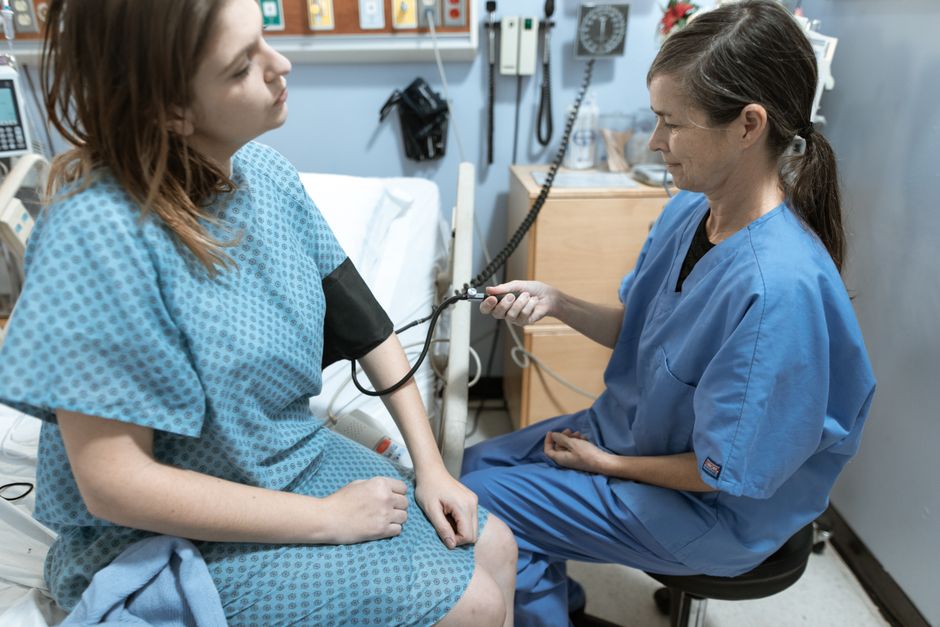
- Non-critical items touch only intact skin — blood pressure cuffs, stethoscopes, bed rails. Low- or intermediate-level disinfection is enough, because intact skin is already a solid barrier against infection.
What methods are actually used for each?
Sterilization mostly relies on steam, gas, or plasma; disinfection mostly relies on liquid chemicals or wipes. The most common sterilization method in hospitals is the steam autoclave — a pressurized chamber that uses saturated steam at around 270°F to destroy microorganisms, including spores, in a cycle that typically runs 20 to 70 minutes depending on the load. Heat-sensitive items (certain plastics, some camera equipment) go through low-temperature methods instead, like ethylene oxide gas or hydrogen peroxide gas plasma, which take longer but don't melt or warp delicate materials.
Disinfection methods vary by level. Low-level disinfection is often just an EPA-registered wipe or spray used on surfaces and non-critical equipment, taking a few minutes with a required wet-contact time. High-level disinfection, used for semi-critical items like endoscopes, involves soaking the item in a chemical germicide (such as ortho-phthalaldehyde or glutaraldehyde) for a set time, then thoroughly rinsing it — a process that's far more exacting than it sounds and is a major focus of CRCST and CSPDT exam content.
What goes wrong when the wrong one is used?
The most common real-world mistake is treating high-level disinfection as "good enough" for something that actually needs sterilization, usually because of time pressure. A busy clinic running behind on patient turnover might disinfect a semi-critical scope correctly but then, under pressure, skip the step of fully drying and storing it properly — allowing bacteria to regrow in residual moisture before its next use. Another frequent error: running an item through an autoclave without first verifying it's compatible with heat and moisture, which can damage the device even if it technically achieves sterility.
A subtler mistake is skipping or rushing manual cleaning before either process. Sterilization and disinfection only work on a clean surface — organic material like blood or tissue can shield microorganisms from steam, gas, or chemicals entirely. This is why every device's manufacturer instructions for use (IFU) — the document specifying exactly how an item must be cleaned, inspected, and processed — spells out a cleaning step before any kill step, and why techs are trained never to shortcut it, no matter how backed up the sterile processing department is.
Do these terms apply outside of hospitals?
Yes, but the stakes and methods scale down. Dental offices sterilize instruments that touch gum tissue, tattoo and piercing studios sterilize needles, and food service uses disinfection (not sterilization) on surfaces because food contact doesn't involve sterile tissue. The Spaulding logic — match the method to how deep the contact goes — holds up across every one of these settings, which is part of why it's taught as foundational knowledge rather than a hospital-only rule.
Choose sterilization if…
You're processing anything that will enter sterile tissue, a body cavity, or the bloodstream — surgical trays, implants, biopsy tools. There's no acceptable substitute, and every major infection control body (the CDC, AAMI, AORN) is explicit on this point.
Choose disinfection if…
The item only touches intact skin or mucous membranes and the manufacturer's IFU doesn't call for sterilization. Match the disinfection level — low, intermediate, or high — to the Spaulding category rather than guessing, and always follow the posted contact time rather than wiping and moving on.
Where does this fit into a Sterile Processing career?
This exact distinction is one of the first things covered in CRCST and CSPDT exam prep, because it's the foundation everything else in the field builds on. Instrument handling, decontamination room workflow, and even how a sterilizer is loaded all trace back to correctly applying Spaulding classification. If this topic made sense to you and you want to see how it fits into a full curriculum, our 9-week course overview lays out exactly what's covered, week by week, whether you attend in Chicago, live on Zoom, or fully self-paced.
Ready to start?
If sorting out sterilization from disinfection felt satisfying rather than tedious, that's a good sign for this field. Sevy SPD's program prepares students for both the CRCST and CSPDT exams in 9 weeks, with a 91% first-time pass rate among our 2,600+ graduates. Take a look at the course overview to see which format fits your schedule.
Topics:
Ready to Advance Your SPT Career?
Join 2,639+ graduates who prepared for their CRCST and CSPDT certifications with Sevy SPD.
Start Your Training Today →