What Does a Sterile Processing Technician Do All Day
A sterile processing technician cleans, inspects, assembles, and sterilizes surgical instruments for hospitals. Here's what a real shift looks like, start to finish.
A sterile processing technician (SPT) cleans, inspects, assembles, and sterilizes the surgical instruments that hospitals use in operating rooms. You work behind the scenes in a hospital department called SPD (Sterile Processing Department), moving trays of instruments through several stations before they go back into surgery. The work is physical, detail-heavy, and done mostly on your feet across 8- or 12-hour shifts.
Quick answer
- Core job: clean, inspect, assemble, and sterilize surgical instruments so they're safe to reuse on the next patient.
- Where you work: a hospital SPD, split into a "dirty side" (decontamination) and a "clean side" (inspection, assembly, sterilization, storage).
- Physical demands: standing for most of your shift, lifting trays that can weigh 10-25 pounds, working in a hot, humid decontamination room while wearing protective gear.
- Schedule: hospitals run 24/7, so shifts include days, nights, weekends, and holidays.
- Education needed: no college degree — most employers want a high school diploma or GED plus a certification exam like CRCST or CSPDT.
What's the first step in a shift — decontamination?
The first stop for every used instrument is decontamination, the room where you remove blood, tissue, and debris before anything gets cleaned for real. You'll wear a fluid-resistant gown, gloves, a face shield, and sometimes rubber boots, because instruments arrive straight from the operating room covered in what surgeons just used them for.
Inside decon, you'll sort instruments by set, run them through an ultrasonic cleaner (a machine that uses sound waves in water to shake loose debris from hinges and crevices), and load cage washers — large machines similar to industrial dishwashers that run on hot water and enzymatic detergent. The room stays warm and humid because hot water and steam are part of the process, and you're on your feet the entire time.
What happens in inspection and assembly?
Once instruments come out of the washer, you inspect each one under bright light or a magnifying lens to check for cracks, dull edges, or debris the washer missed. This is the clean side of the department, and it's quieter and cooler than decon — closer to working at a detailed, repetitive assembly line.
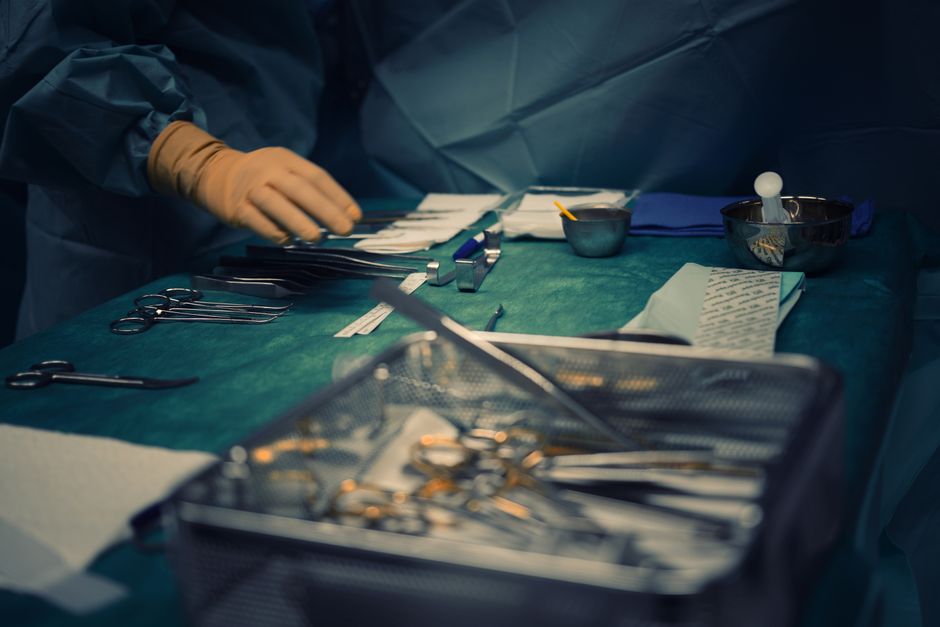
You'll match each instrument against a count sheet (a checklist tied to a specific surgical tray, like a set for a knee replacement or an appendectomy) and assemble complete trays for sterilization. A missing scalpel handle or a scissor that doesn't close right gets pulled and replaced before the tray moves forward — a mistake here can delay or cancel a surgery.
How does sterilization actually work?
Most trays go through an autoclave, a machine that uses pressurized steam at high temperatures to kill bacteria, viruses, and spores on the instruments. A typical cycle runs the tray through heat-up, sterilization, and cooling phases, and you'll load and unload these machines throughout your shift.
Not everything can handle steam. Instruments with sensitive plastics, electronics, or fiber optics — flexible scopes, for example — go through low-temperature methods like hydrogen peroxide gas plasma instead. Every load includes a chemical indicator strip and, periodically, a biological indicator to confirm the sterilizer actually reached the temperature and exposure time it needed to.
Where do instruments go after they're sterile?
Sterile trays move to a climate-controlled storage room until they're needed, then get pulled onto case carts and delivered to the operating room. Storage areas are kept at specific temperature and humidity levels because moisture or heat can compromise a sterile package before it's ever opened.
This is also where timing pressure shows up. Surgery schedules don't wait, so you're often tracking which trays need to be ready by a specific hour and communicating with OR staff about what's coming and when.
What does the pace feel like over a full shift?
The pace is steady and rarely slow, because hospitals don't stop needing instruments. A typical 12-hour shift might start with a backlog of trays from overnight surgeries, move into a mid-shift rush as the day's scheduled operations wrap up and send instruments back, and end with prepping supplies for the next shift.
Depending on the hospital's size, you might process anywhere from a few dozen to several hundred trays in a day. Breaks are scheduled, but the workload doesn't disappear while you're on one — it's waiting when you get back.
What's physically hard about the job that people don't expect?
The heat and humidity in decontamination surprises a lot of new techs. You're wearing a plastic gown and gloves next to hot water and steam, and that room can run noticeably warmer than the rest of the department.
Beyond that, expect a lot of standing, repetitive lifting of trays, and fine motor work — inspecting small instruments for hours at a stretch. Night shifts and weekend rotations are common early in your career since hospitals need coverage around the clock, and seniority usually determines who gets the more convenient schedule.
Do you need a degree to become an SPT?
No. Most hospitals require a high school diploma or GED, not a college degree. What they do look for is a course completion certificate that satisfies the education requirement to sit for a certification exam, plus the certification itself.
The two main certifications are CRCST, through HSPA, and CSPDT, through CBSPD. Employers vary on which one they prefer, but having either tells a hiring manager you understand instrument handling, sterilization science, and safety standards without them having to train you from zero.
How do you actually get certified and hired?
You take a course that prepares you for the certification exam, pass the exam, then apply to hospital SPD openings — often starting on evening or night shifts. Programs vary in length and format, but the goal is the same: enough hands-on and classroom instruction to pass CRCST or CSPDT and walk into a decon or assembly role with a working knowledge of the equipment.
If you're comparing options, our course overview walks through what a 9-week program covers, including the free orientation week, coursework weeks, and how classes run in person in Chicago, live on Zoom, or fully self-paced.
Ready to start?
If the shift described above sounds like work you could picture yourself doing, the next step is getting the training that leads to certification. Sevy SPD's course overview breaks down the 9-week path, class formats, and what it takes to sit for the CRCST and CSPDT exams.
Topics:
Ready to Advance Your SPT Career?
Join 2,639+ graduates who prepared for their CRCST and CSPDT certifications with Sevy SPD.
Start Your Training Today →